Le Jardin des anatomistes by Noémie Adenis
Review by Alison Hill Campbell
On a visit to the Catacombs in Paris earlier this year, I picked up this intriguing-looking novel in the gift shop. I hadn’t read a French novel for some years and felt like this might be the right one to get me back in the habit. I almost entirely judged this book by its creepy cover, and I was not disappointed. This roman policier set in 17th century Paris begins when a naïve young man arrives from the provinces and immediately gets swept up in solving a series of gruesome murders, or rather, attempted operations carried out by a rogue surgeon.
Sébastian de Noilat is a young herbalist who has come to the capital to try to meet a renowned botanist, bringing some documents containing knowledge that could be useful in healing gangrene. However, if he shares the papers, he also risks revealing a dark family secret. This sub-plot is woven in subtly and provides ammunition to keep the reader guessing right to the very end. The main action focuses on the group of surgeons and enthusiasts attending public surgery demonstrations delivered by Pierre Dionis, events which did actually take place. Bodies are discovered day by day that mimic the surgical topic shown the previous day, and the hapless Sébastian becomes gradually more entrenched in the case. He provides the perfect vehicle to explore the action, pitted against the arrogant and seemingly incompetent police detective Parisot, who is very fond of throwing young men in jail on circumstantial evidence only and then releasing them a day or two later. Parisot ultimately recruits Sébastian as an informer to report back on two suspects, one of whom is his friend Charles, who Sébastian is determined to prove innocent.
Not only is the story a gripping thriller with some rather gruesome moments, including a victim managing to leap off the improvised operating table only to promptly die in the street, the descriptions are deeply evocative. This is a grimy, dark, muddy, oppressive Paris. Sébastian trudges, staggers and wades through deep puddles, past stinking abattoirs, avoiding flocks of sheep and the wheels of carriages on his singular quest to identify the chirurgien tueur. He leads us into a foul-smelling and shadowy basement morgue, to gambling dens full of desperate thugs and through the nooks and crannies of the Bibliothèque du Roi. There is only one scene when the weather is described as anything other than relentless cold, rain and wind, and that is when the detective delivers the news of the murderer’s confession.
As a medical translator who has often translated a surgical report, I wholeheartedly enjoyed this book and the fascination of the Parisian world with surgery felt compelling. It was also interesting to read about the real-life opposition between the community of surgeons and the Faculté de Médecine, who objected to the surgeons claiming a superior understanding of anatomy and how the body actually works. There are enough twists and turns to keep the reader interested, as well as an unexpected eleventh-hour intervention to save the day. If you enjoy a historical novel that delights in our favourite detective story tropes, adding a touch of gory detail, then this page-turner could be a perfect choice for your next read.
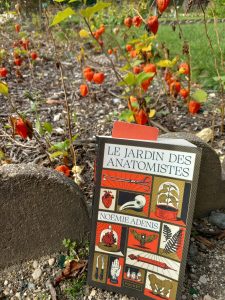
Reading this novel in the Jardin des Plantes, formerly the Jardin du Roi, where some of the action takes place