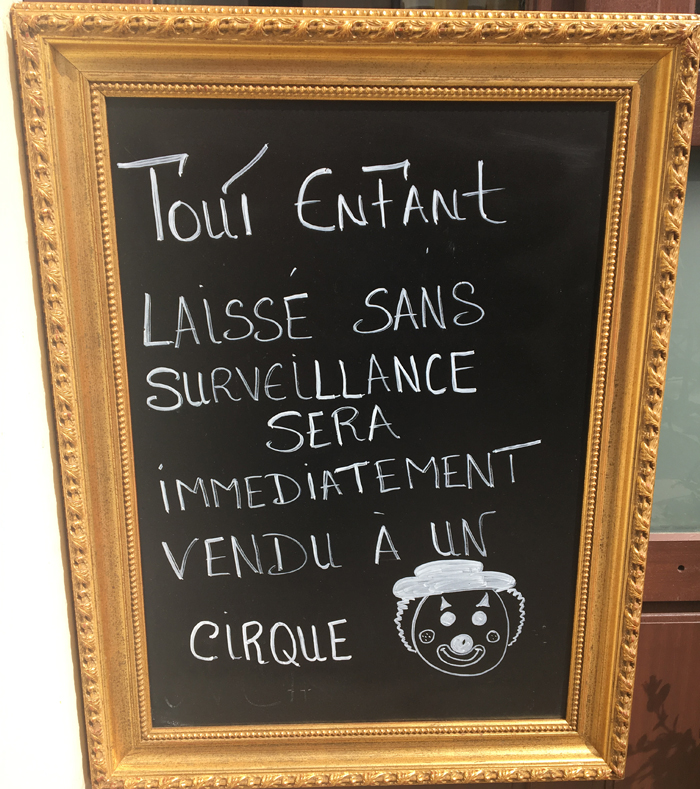
When wrapping up this successful day the organiser, Ian Giles, wryly described it as ‘a clown car filled with translators and catering’. You get the picture. But it would not be true to say the day was entirely light-hearted: as you might expect, challenges also featured in the discussions. Mainly low visibility and pay, plus the threat from (buyers of translation who believe in) generative AI and machine translation. As we translators also know, there is strength in numbers as we face these challenges.
“T’es prêt à enfermer tes traducteurs dans un bunker, à les traiter comme du bétail ?”
(Les Traducteurs, film trailer https://www.youtube.com/watch?v=K3cMMLmKm4w).
An alternative description of the event (see above) comes from my first impressions of the mostly basement-level venue – which however did have plenty of daylight due to a glazed roof. A special mention goes to the catering administered by the French Network’s own Paul Appleyard and Jane Davis (plus Elisabeth Lyman (FR-EN), who many of you will know, and Emma Olsson (SV-EN)) to ensure that, like livestock, we were fed and watered.
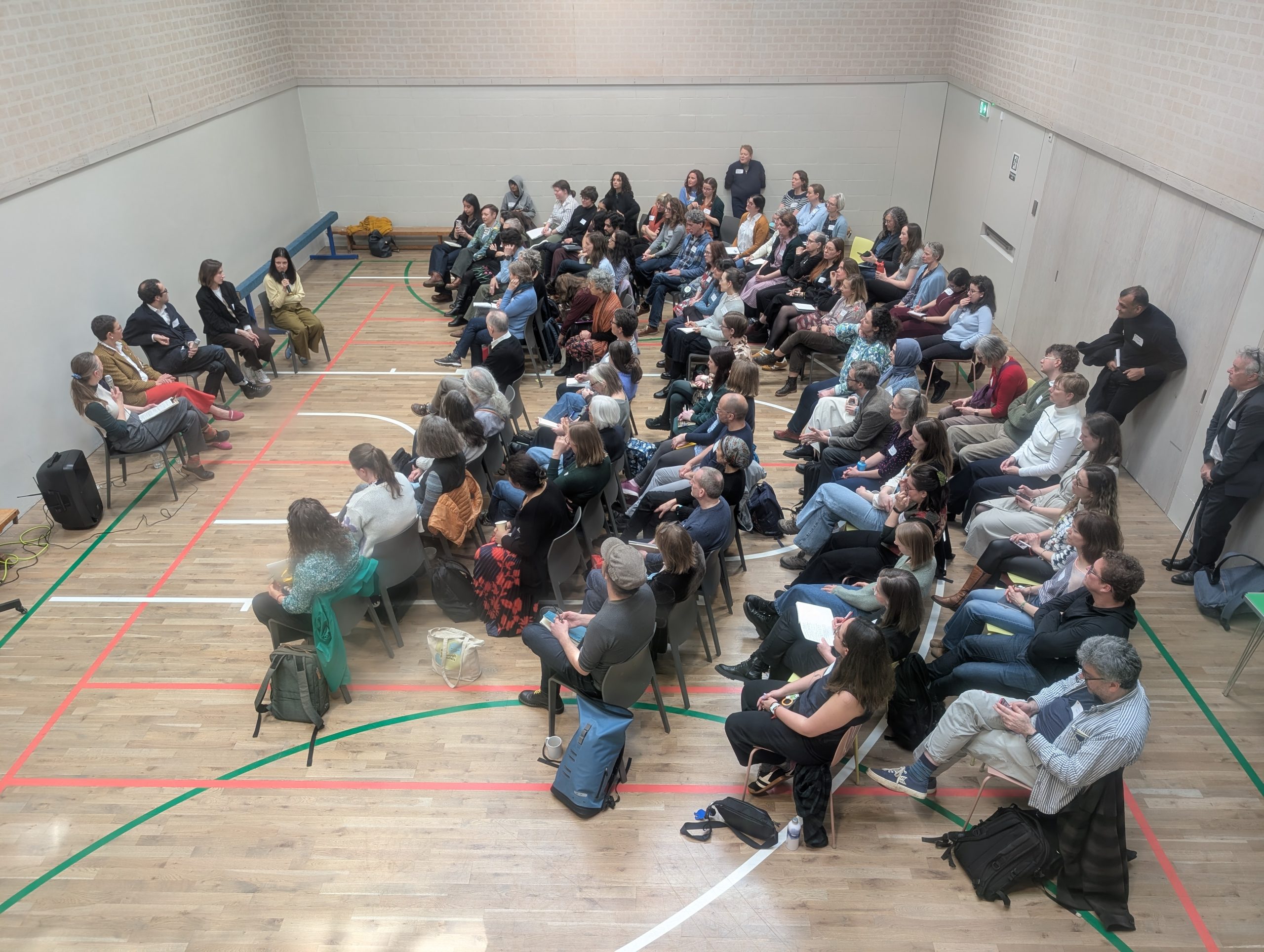
It’s possibly worth noting that since this event focused on the translation of literature, the translators present were all focused on that market segment. It differs in some respects from the overall market for translation. As a translator of non-fiction also working in other areas, I found that in some ways translators of fiction now face an AI/machine translation question that other types of translator have been facing for a while (perhaps in a somewhat different form).
The event programme began with Sarah Ardizzone and Daniel Hahn talking about Visibility and the Literary Translator. Both speakers have amazing track records in public-facing work that talks about translation: for example Sarah with the Spectacular Translation Machine and Daniel with a book, due out in April, called If This Be Magic: Shakespeare in Translation.
One recurring question got its first mention in this session – how to refer to non-translators? Is ‘civilians’ too dismissive’? Do people divide into ‘us’ and ‘not us’? Another question is ‘who do we want to be visible to?’ And does visibility mean better pay?
Translating Yourself for the Audience was a panel with Martin Colthorpe, Yana Ellis, Ella Harold, Aina Marti and Nichola Smalley. Translators appear at some literary festivals these days, but equally some established festivals do not include any international authors. The panel believe there is untapped curiosity about translation in the world at large; some bookshops seem to buy into this too. When translators do appear, one factor that influences how they come across is whether moderators know how to engage with them.
Another time when translators sometimes get involved publicly is by translating interview questions or interpreting for, and even ‘hand-holding’, authors on tour. Again the issue of payment arose – sometimes translators are only paid expenses for book tours. After an outcry, many book festivals do now at least pay a token fee to people who appear in their events.
After lunch, Shaping Your Professional Self in Response to Others was a ‘reverse lecture’ by Christophe Fricker. He successfully countered people’s tendency to fall asleep during this slot by giving participants active tasks to do. One exercise encouraged us to think about translation-adjacent tasks we do, but perhaps aren’t paid for. Another gave each group one persona to discuss, work up into a role, then adopt while mingling with the other personas in the room. Each persona had a different level of enthusiasm for AI/MT, which led to some interesting conversations!
The Write Profile explored how translators write about themselves and their work, with Beth Hickling-Moore, Elete Nelson-Fearon, and Paul Russell Garrett. Blogs are often where translators can be found writing about translation: one Dutch bookshop website even hosts such a blog. Jen Calleja has also blogged for her publisher Faber about a new translation. Podcasts are popular too, such as ‘It’s Lit in Translation’.
It was suggested that translators might find it handy to keep notes and jot down ideas on their process in case they are asked to justify the rates they charge. But some care is needed: does describing something as a ‘passion project’ mean or imply that it isn’t (well) paid? Similarly if you or others describe your work as ‘art’?
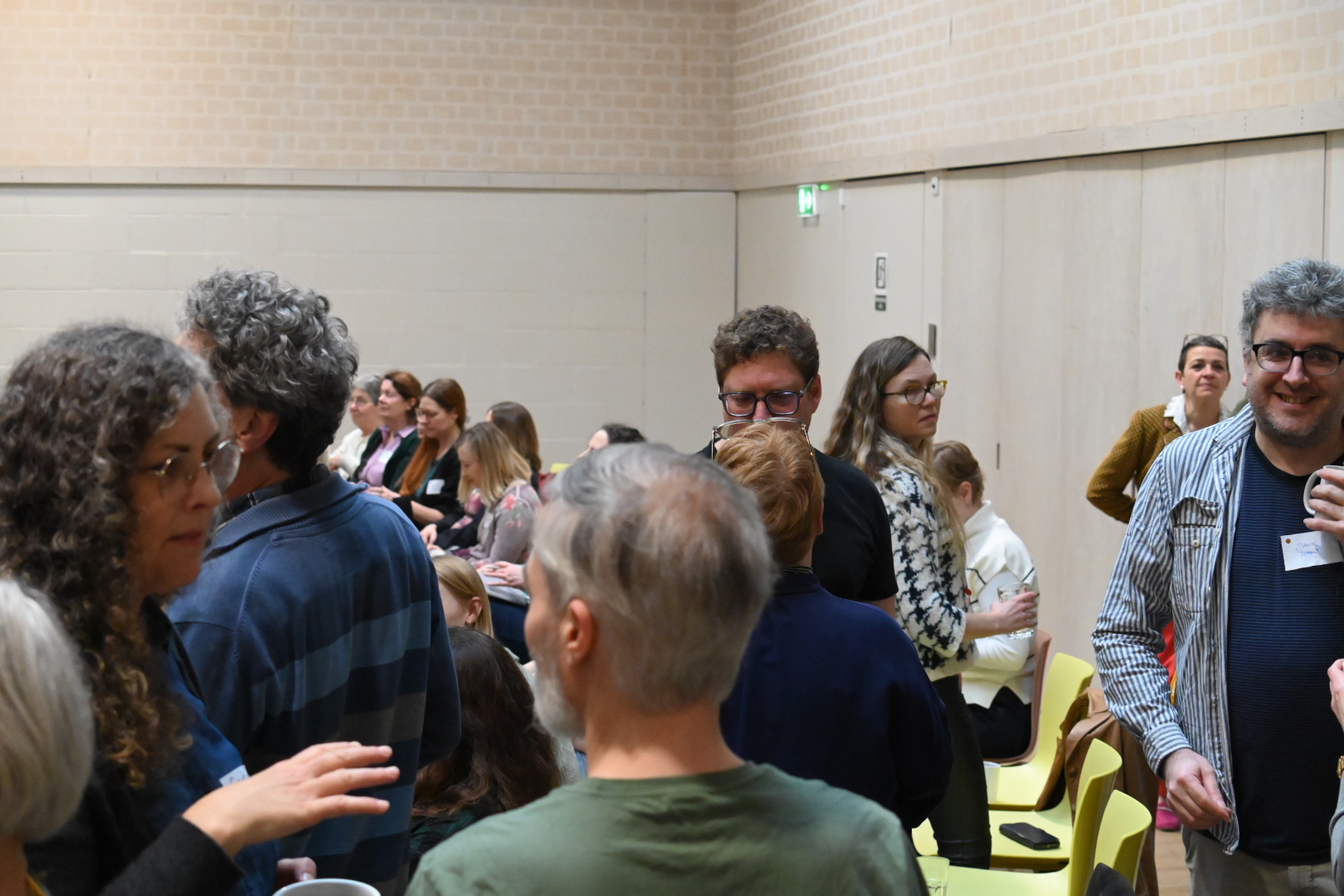
Looking in the Mirror rounded the day off with a ‘structured networking’ discussion of everything we’d heard and thought during the day. This was followed by an unstructured drinks reception – and my first taste of wine from a can. It was certainly a full and varied day, with a lot of food for thought.
by Kim Sanderson
Images by Paul Appleyard www.appleyard.eu