by Chloé Pellegrin
Translator from English into French and Founder of Frogology
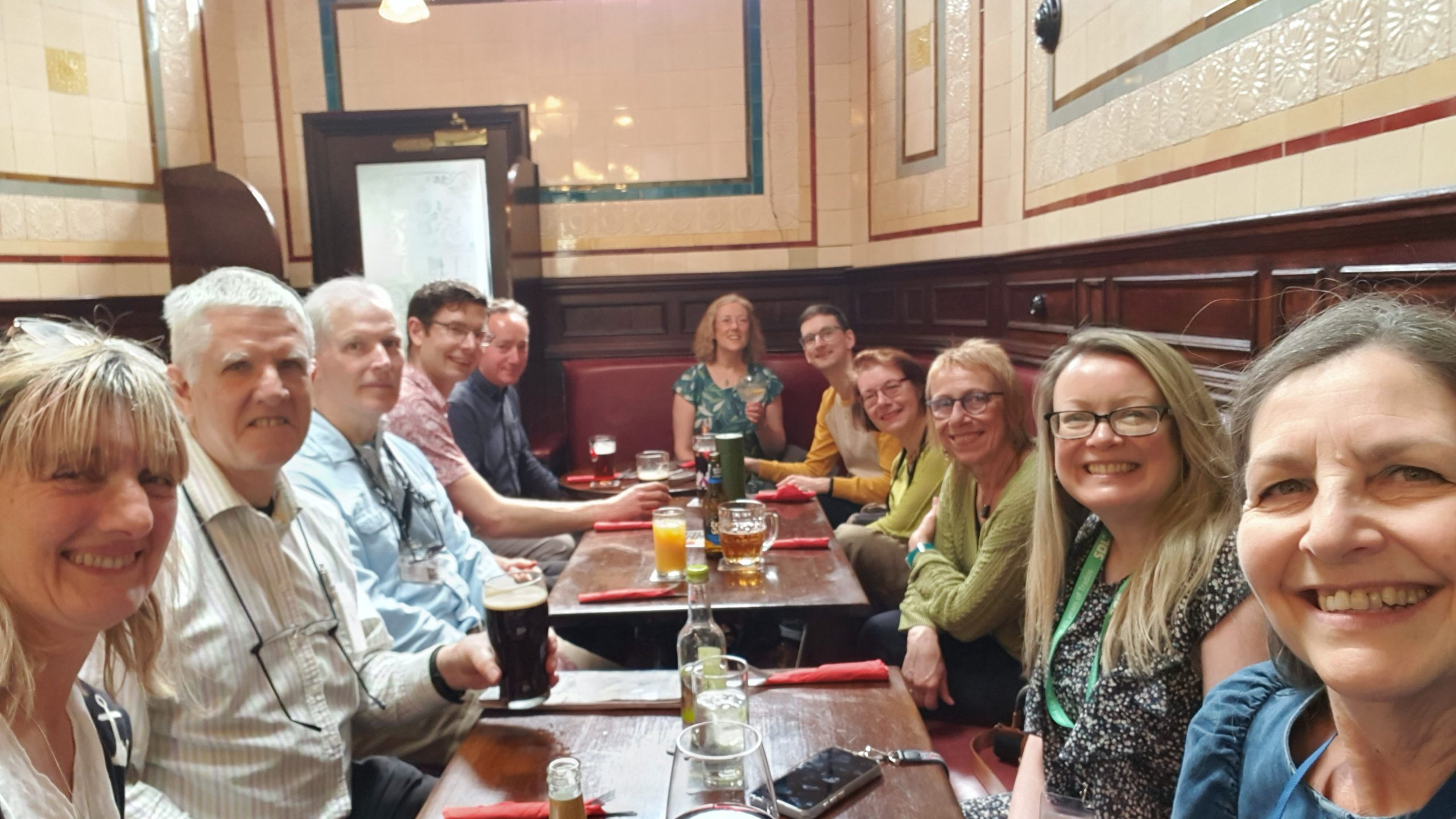
On Saturday 25 April, a brilliantly hot and sunny day, members of ITI Cymru Wales, ITI Western Regional Group (WRG), ITI South West, ITI West Midlands Group (WMG) and the North West Translators’ Network (NWTN) met in Birmingham for the first ever edition of WestWords. This member-led joint event featured two parallel streams: a traditional conference stream with scheduled presentations and sessions delivered by members, and an unconference stream with attendees proposing topics for discussion ahead of time and free-flowing discussions on the topics of the day.
Unsurprisingly, a lot of the discussions focused on the rapid rise of AI and on translators’ income, job satisfaction and diversification efforts.
After a brief welcome by ITI Cymru Wales Event Coordinator Courtney Greenlaw, attendees split into groups to discuss the topics that grabbed their interest.
In the morning, I chose to attend the unconference sessions Challenges of revising translations: human vs. machine-generated (Proposer: Yolanda Vercher) and Dealing with a downturn in work (Proposer: Laura Jones). The first one highlighted common types of errors thrown up by AI and the time and effort required to fix them. Few of the linguists present on the day reported doing more MTPE than translation, a fact that perhaps reflected their level of expertise and higher rates, rather than indicating that most content is still being translated from scratch. In the second session, it became obvious just how many people have either taken or are considering taking a side job. For a lot of people, being a translator very much remains central to their identity, and as a consequence, having a second activity can bring a real sense of loss.
After a quick break, I attended The tech gap in the translation profession (led by NWTN’s Nicole van den Wittenboer), which explored challenges facing translators and the tension between embracing technology and protecting livelihoods.
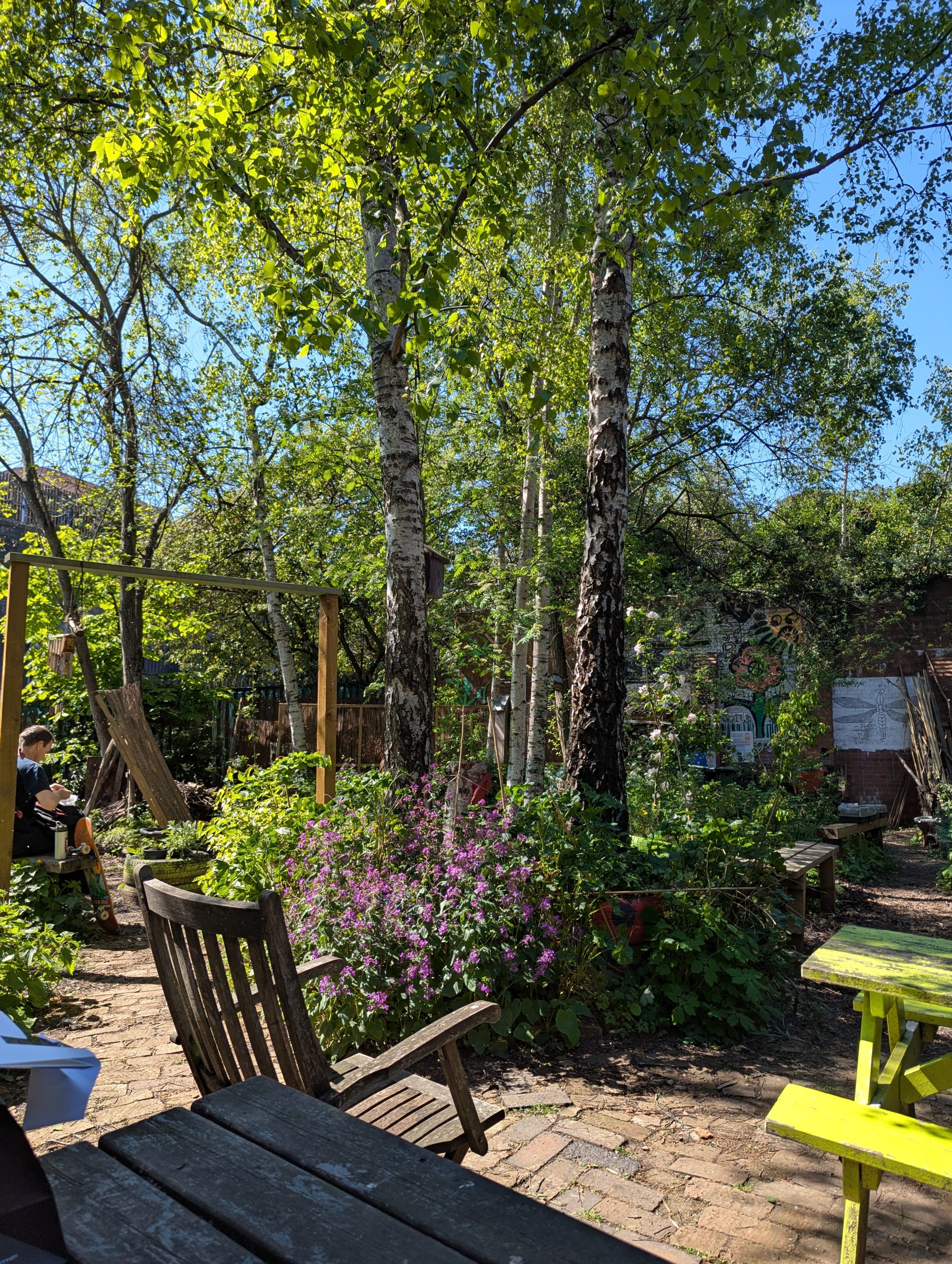
After a leisurely lunch in the wild and sunny garden of the environmentally friendly Warehouse, our venue for the day, I attended two talks providing a welcome relief from the doom and gloom of AI threats, by returning to core skills and specialist areas.
In Kicking off linguistic futures, Jae Marple of WMG spoke about his outreach work in local secondary schools, where he tries to inspire the next generation of linguists. Unlike people with sidelines far removed from languages or translation, the coordinator of the Sports Network enjoys this work that ties in with his personal interests, and inspires other people to try out translation. In Oooh là là ! Translating comedy for the stage, Charlie Gobbett (WMG) explained how his passion for amateur theatre led him to translate plays, and shared practical examples of adapting local humour and cultural references, as well as the need to define your audience even before you start translating. Attendees enjoyed having a go at dealing with some of these examples, before Charlie revealed his own translation choices.
Finally, it was back to the garden, an unlikely setting perhaps in which to return to technology. I opened the discussion on MT/AI: how has it affected our business and how do we tackle its challenges? proposed by John Rush & Nick Crosby. A whole new group of people contributed to the discussion, concluding that stronger advocacy, collaboration and mutual support amongst translators and interpreters were some of the ways we can fight for our survival.
As people dispersed in the late afternoon sunshine, I had time to enjoy a glass of wine with a couple of colleagues before boarding my train back to Cardiff. Although only one day long, WestWords managed to present a great opportunity to connect with colleagues from other networks and reflect on the profession’s future. While the landscape is changing, thriving may still be possible through diversification, specialisation (preferably in a subject for which you have a personal affinity) and continued commitment to quality. In the words of the Māori people of New Zealand: Kia kaha!